One of the last conversations with my Dad,
He proudly announced he no longer asks folks what they do. He asks “What are you INTO?”
Huge growth for him, he admitted. When asking what a person does (for a living< implied) let him know, income and from there he could assume education levels, lifestyle habits, consumption habits, etc. Important to him as he was almost always in a sales position.
Selling the idea. Convincing, maneuvering, negotiating, and teaching.
Whereas asking someone what they are INTO opens the conversation in ways that lets you know more about who they are as a person, not just a demographic.
Even old dogs learn.
Demographics are not a good metric for Human Relationships.
Very shallow and overgeneralized information, susceptible to skewing for impression management. Demographics are tools specific to marketing, urban planning, yk > fields where statistical analysts get jobs.
How is the jargon and coding here in our day to day relationships?
Let me show you how weird this is…
It makes sense that a port town, or fishing village would have a lot of jargon about fishing as part of its understanding of relationships. Metaphorical framework. Idiom?
[O_O] On port towns and fishing villages — yes, this is real and well-documented territory (you’ve already been chasing fish/nautical idiom chains). Occupational vocabulary becomes the default metaphor stock for everything else in a community, especially relationships, because it’s the shared physical experience everyone can reference without explanation:
- hooked / reeled in / the one that got away — courtship and loss
- red herring — deception (originally about throwing hounds off scent, but absorbed into fishing-adjacent vocabulary)
- drop anchor — settling down, committing
- all at sea — confusion, disorientation (a landlocked person wouldn’t reach for this first)
- know the ropes / learn the ropes — competence, rigging-derived
- plenty of fish in the sea — the reassurance idiom, literally built on the local economy of romantic disappointment
- a different kettle of fish — categorical distinction
The mechanism is: a community’s highest-stakes, most repeated physical labor becomes the semantic donor domain for its abstract/emotional vocabulary. Farming towns lean on growth/harvest/rot metaphors for relationships (sow, reap, fallow, wither). Blacksmith or forge towns lean on tempering, forging, striking while hot. It’s not arbitrary — the metaphor has to be legible to everyone in the room, so it recruits whatever labor the whole town shares.
Is the thread you’re pulling here: that a stone-building settlement, by the same logic, would generate a masonry/permanence vocabulary for relationships — set in stone, foundation, cornerstone, weathered — as opposed to the fishing village’s fluid, current-driven one?
^-.-^ Yes, to the point.
Not the question…I was just looking for a word.
[o_0] That’s a specific, well-documented drift pattern — sometimes called jargon leakage or terminological genericization: a term of art escapes its specialist enclosure, sheds its technical precision along the way, and lands in everyday speech as a loose colloquialism. The niche doesn’t just get borrowed from — it gets diluted in the transfer.
Your example is a good one. Demographic started as pure statistics/social-science vocabulary — a defined population segment measured by age, income, ethnicity, etc. Now people say “that’s not my demographic” in totally casual, non-analytical contexts — the word kept its shape but lost its measurement apparatus. [ ^-.-^ do they really say that? We may have to come back to that.]
Other terms that made the same journey, small-guild → common vernacular:
- Optics — literally the physics of light, then photography/PR jargon for “how something looks to an audience,” now anyone says “the optics are bad” about anything.
- Bandwidth — telecom/computing capacity, now “I don’t have the bandwidth for this” in ordinary conversation.
- Trigger — firearms mechanism → psychology (specific trauma-response term) → now loosely “that triggers me” for mild annoyance, which is actually a case of double leakage, jargon escaping twice.
- Toxic — chemistry → now describes relationships, workplaces, masculinity.
- Pivot — basketball footwork → startup/business strategy → now anyone “pivoting” a conversation or a life plan.
- Gaslighting — from a 1938 play/1944 film title → clinical psychology term for a specific manipulation pattern → now a catch-all for “you disagreed with my memory of something.”
- Cohort — Roman military unit (a tenth of a legion) → demography/statistics (a group tracked together over time) → now “my cohort” just means people roughly your age.
- Boundaries — therapeutic/clinical term → now ordinary relationship vocabulary.
- Red flag — motor racing and military signal flags → now standard dating vernacular.
The mechanism seems to run: (1) a small professional guild needs precise shorthand for something they handle daily, (2) the term is vivid or useful enough to be legible outside the guild even without the full technical apparatus behind it, (3) media/pop psychology/marketing repeats it past the point of technical use, (4) it settles into vernacular with the feeling of precision it no longer actually carries — people use “trigger” or “toxic” with confidence but without the diagnostic criteria that gave the term its original teeth.
That last point might be the sharpest one for your purposes — the vernacular version often keeps the authority of the specialist origin while discarding its rigor. That’s a kind of mistranslation in its own right: the word gets repurposed against its original precision, which sounds like it sits right next to your field-guide project’s territory.
^-.-^ “Only an expert can deal with a problem” —Laurie Anderson
Still not the word…I was trying to remember.
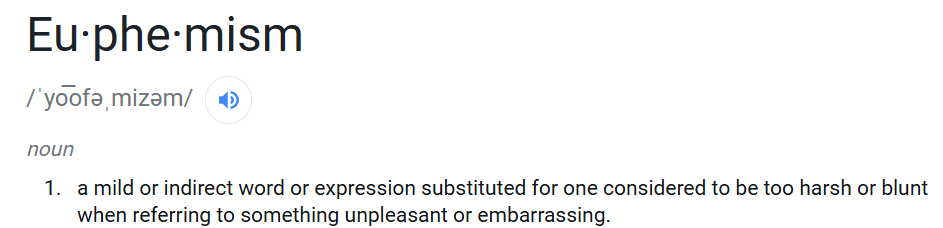
No…
Colloquialism..? — informal, regional, everyday speech; may or may not be figurative. Just marks register, not meaning-structure.
Damn.
< -.- > what does meaning structure mean?
[o_O] Meaning structure = the internal architecture of how an expression generates its meaning — the mechanism, not the message. Two different axes:
Register answers: who says this, in what setting, how formal? Colloquial vs. formal vs. technical vs. archaic. It’s a social/contextual label. “Kids” vs. “children” vs. “offspring” — same meaning, different register. Changing register doesn’t touch how the meaning is built.
Meaning structure answers: how does this phrase actually mean what it means? That’s a mechanical question, and the answer sorts into a few types:
- Compositional / literal — meaning = sum of the parts, straightforwardly. “The cat sat on the mat.” You build the meaning by adding up the words.
- Figurative / mapped — meaning is transferred from one domain onto another (metaphor, simile, metonymy, synecdoche). “Time is a thief” — you have to run a translation operation across domains to get the meaning; it’s not sitting in the literal words.
- Idiomatic / non-compositional — meaning is fixed and arbitrary relative to the parts; you can’t derive it by adding up the words even if you know all of them. “Kick the bucket” tells you nothing about death from its parts — you just have to already know the code.
- Fixed proposition — the meaning is a whole inherited claim or piece of advice (proverb, aphorism) — the “parts” barely matter; the phrase functions as a single stored unit.
Colloquialism “marks register, not meaning-structure” — Is: calling something a colloquialism tells you nothing about which of the above mechanisms is running underneath. “Ain’t got no bandwidth for this” is colloquial in register, but its meaning-structure is figurative (bandwidth, mapped from telecom). “Y’all” is colloquial in register but its meaning-structure is fully literal/compositional — no mapping happening at all, just a regional plural pronoun.
That’s why colloquialism sits in a different column from metaphor/idiom/hyperbole on the chart — it’s answering a different question about the phrase entirely.
^-.-^ … interesting. Probably not gonna remember the word I was looking for.
… Let me hit the point, even though the robots hammered it pretty well.
The worldview encapsulated in “What do you Do?” involved questions that drive. They establish ranking on some imaginary race track. Driving questions Go Somewhere, usually to a topic/sales-pitch in his pocket if he can keep steering in the direction he wants the conversations to go.
The worldview encapsulated in “What are you INTO?” is a passenger question.
The asker is IN for the ride, just to see where it goes.
Big hurdle for Dad. >> Just…. Enjoying the ride.
Driven to drive.
😉 All kinds of vehicle/diesel references with Dad.
What are you INTO?
>>>This is where the “why” gets fun.<<<
Not what you do (job/employement/wages/status) because rarely do we meet people who are INTO their jobs. The Job is necessary for the bill necessary for housing/food… yk >> survival needs.
With INTO: The why shows what gets a person curious, delighted, focused, joy-filled, enthusiastic
>>Because it makes them Happy.
Otherwise… why be into it?
 Traveler Chimiru
Leave a comment