They Did NOT Destroy My Forest.
Potential should be lifted up. Not put down.
We talk about deprivation as though it is something that happens at a societal level. Poverty. Inequality. The have-nots. The people who go without while others enjoy abundance.
But sometimes, the disparity is closer to home.
Sometimes, it begins in the family.
Who had their own space? Their own room, dresser, desk, vanity, closet? Who had clean linens, curtains, carpet, pillows, books, records, and toys?
Who got the dance lessons? The baton lessons? Softball. Musical instruments. Uniforms. Opportunities to explore their interests, develop their talents, and discover what they might become?
Who was invested in?
Who was an afterthought?
Who was left behind, asked to wait, or told not to feel jealous while watching the difference play out in real time?
Who got to have things?
Who had to watch?
Who Was Allowed to Eat?
Who got fuller plates? Extra helpings?
Who could eat, and eat, and overeat, without being made to feel that wanting more was a character flaw?
Who went hungry?
Who was allowed to have an appetite? To express a need? To enjoy abundance without guilt or punishment?
Who got pampered?
And who got locked in with their most violent, torturous hater every night?
These are not all the same kind of deprivation. Some concern material possessions. Others concern opportunity, dignity, safety, and the basic human need to feel that you matter.
But they belong in the same accounting.
Because childhood is not simply a collection of things a family owns. It is also a record of how those things, and the care behind them, are distributed.
Who receives consideration?
Who receives protection?
Who is encouraged to grow?
And who is expected to accept less?
The Best of Us Girls
There were the accolades. The praise. The awards. The glowing descriptions of beauty, talent, and potential.
Such talent. Such promise. Such a bright future.
The most special of special.
The best of us girls.
And what happens to the child who grows up beside that narrative?
What happens when one child’s potential is celebrated while another’s is suppressed? When one child is given the resources to develop, the support to succeed, and the freedom to take up space, while another learns to make herself smaller?
What happens when the favored child’s ceiling becomes the limit the other child is expected to respect?
You learn to watch.
You learn to calculate.
You learn which parts of yourself are safe to show and which might provoke a reaction.
You learn to prune yourself before someone else reaches for the shears.
And eventually, you may begin to mistake your survival strategies for your personality. You may believe that your limitations are natural, that your unrealized dreams were never meant for you, that your smallness is simply who you are.
But what if it isn’t?
What if you were not born to be small?
What if you learned to stay small?
Dream Eaters
My mother and sisters had a different view of potential than I did.
I believe potential should be lifted up.
They treated mine as something to be destroyed.
That is how I experienced my family. My older sisters occupied different positions in the family dynamic, and violence, hostility, and intimidation were part of my childhood. My mother did not provide the protection I needed; as I experienced it, she fed the hostility directed at me and helped create the circumstances in which it continued.
My father and brother were often away at work or elsewhere in the house.
And I was the child living inside it.
There is a particular kind of loneliness in having no reliable refuge from the people who are supposed to be your refuge. Home is supposed to be where you can rest, where you are protected, where you are allowed to grow.
What happens when home is where you learn to contain yourself?
What happens when the people around you seem threatened by your development?
What happens when surviving them is interpreted as rebellion?
Perhaps the greatest rebellion is not an act of defiance at all.
Perhaps it is simply refusing to disappear.
I have spent a lifetime understanding that other people have sisters, too. Other people know what it is to have their dreams undermined by someone who should have been cheering them on.
Dream eaters.
People who cannot—or will not—make room for another person’s possibilities. People who seem to need someone else to remain in the role assigned to them, even when that role requires them to sacrifice their own growth.
Sometimes the harm is overt. Sometimes it is subtle. Sometimes it comes disguised as concern, correction, teasing, or a reminder to know your place.
Whatever its form, the effect can be the same: a person begins to live within limits that were never truly theirs.
I know something about those limits.
And I know what it is to question them.
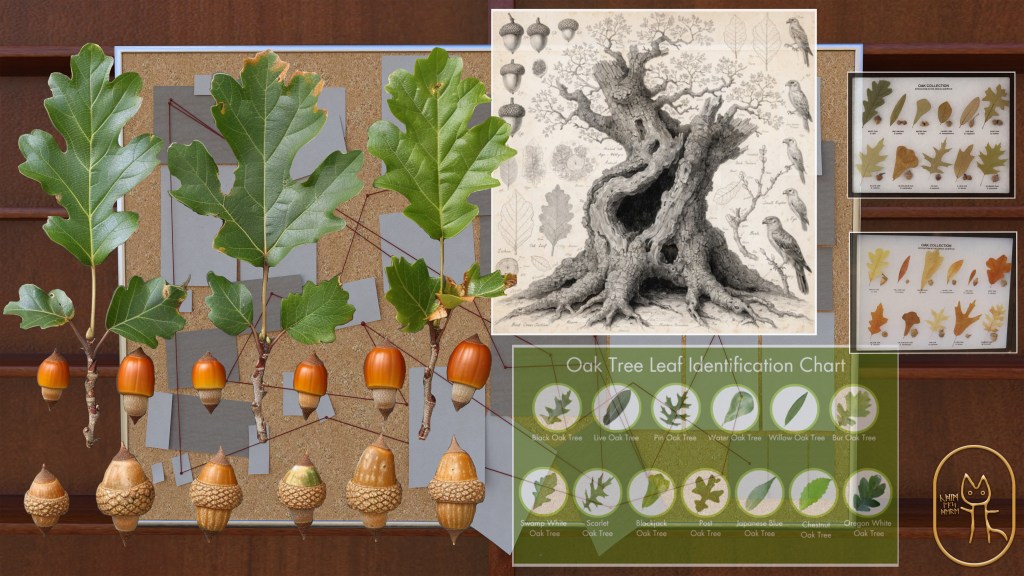
Want My Acorn?
Yes. I wanted my acorn.
The little beginning. The possibility. The chance to discover what I might become if I were given the things every growing person needs: nourishment, opportunity, encouragement, room, and time.
I wanted my potential to be recognized rather than treated as a threat.
I wanted to be allowed to develop without having to calculate whether my growth would upset someone else’s position.
I wanted what I believe everyone deserves: a chance.
Because I believe everybody has potential.
Not everybody will become famous. Not everybody will win awards, accumulate impressive credentials, or achieve what the world calls greatness.
That is not the point.
Potential is not a competition.
An acorn does not need to become the tallest tree in the forest to justify being watered.
It needs a chance to grow.
And that is what I try to give the acorns I find in other people.
I look for the possibilities that have been overlooked. The beginnings that have been dismissed. The spark that someone has not yet learned to trust.
I want to encourage people. I want them to discover what they can do. I want them to have opportunities to become more fully themselves.
Not because their success benefits me.
Not because they owe me anything.
Because I believe potential should be nurtured.
I wasn’t just watering my own acorns. I was trying to water the acorns hidden in every person I have ever met.
Not just my dreams.
Theirs, too.
The Forest
There is something important about a forest.
A forest is not one tree. It is not one family’s chosen favorite. There is not a single winner standing above everyone else.
It is an entire living world.
Different trees. Different stages of growth. Different forms of life. Some towering, some young, some struggling toward the light.
A healthy forest makes room for growth.
It does not require every tree to remain small so that one tree can feel tall.
It does not measure the worth of every living thing against a single favored specimen.
And it does not need to destroy one seedling to celebrate another.
I spent too long living as though my growth had to be negotiated with people who benefited from my smallness.
I kept myself small so I would not threaten my sister’s ceiling.
She had a head start. Supporters. Enablers. Providers. Saviors. Funding. People who helped her along, recognized her potential, and invested in her future.
I was held back.
Those are not equivalent starting conditions. They are not the same race.
And I do not need to pretend otherwise to reclaim my life.
I can acknowledge what she received and what I was denied. I can grieve the opportunities I did not have. I can name the years spent adapting to circumstances that should never have been imposed on a child.
I do not have to minimize what happened in order to move forward.
Nor do I have to spend the rest of my life organizing myself around it.
Because that is the thing about potential: it is not a debt owed to the people who denied it.
It is not something I must prove by becoming more successful than my sisters.
It is not a contest I must win to establish that I deserved better.
I deserved better before I accomplished anything.
I deserved safety before I demonstrated resilience.
I deserved encouragement before I achieved success.
I deserved the opportunity to grow simply because I was a child.
It Is My Turn
I am gearing up to step into my potential.
Not the potential my family approved of.
Not the potential that could be expressed without making anyone uncomfortable.
Not the carefully pruned version of myself that learned to anticipate someone else’s reaction (over-reaction) (ongoing never ending reaction) and shrink accordingly.
My Life. My Growth. My Push >> to see my potential realized.
The root-binding stops.
The truncation stops.
The pruning stops.
I gave them long enough.
There is a difference between acknowledging that someone harmed you and allowing that harm to dictate the boundaries of your future.
I can recognize the damage without accepting it as my destiny.
I can stop making myself smaller without needing to make anyone else smaller.
I can continue to believe in the potential of other people while fully investing in my own.
And I have learned that nurturing does not mean endlessly sacrificing myself. I can offer encouragement without surrendering my boundaries. I can see an acorn in someone else without making myself responsible for growing their tree, grove or entire forest.
My generosity does not require my disappearance.
My compassion does not require my continued deprivation.
And my future does not require their permission.
Perhaps this is what it means to become unbound: to stop treating the constraints of your childhood as the natural boundaries of your adult life.
To let your roots spread.
To reach for the light without apologizing.
To discover that the space you were taught not to occupy was never theirs to give or take away.
They Did NOT Destroy My Forest
Yes, some acorns may have been destroyed.
Some opportunities were lost. Some possibilities were interrupted before they had a chance to take root. Some parts of childhood cannot be recovered, and some grief cannot be resolved by deciding to move forward.
I will not pretend otherwise.
But an acorn is not a forest.
The destruction of a beginning (my recovery, re- start, and sanctuary) does not establish the limits of everything that might follow.
There are roots that survived.
There are seeds that remained.
There is growth that has not yet happened.
And there is a future that no longer has to be organized around keeping someone else comfortable.
I am not merely trying to recover the person I might have been if my childhood had been different.
I am stepping into the person I can become now, with my eyes open, my roots spreading, and my own potential finally receiving my attention.
I will continue to water the acorns I find.
I will continue to believe that people deserve opportunities to grow.
However >>> I will no longer confuse nurturing others with neglecting myself.
My acorn matters, too.
My dreams matter.
My growth matters.
And if my flourishing looks like rebellion to the people who expected me to remain small, then they will have to live with that interpretation.
I have a different understanding of what is happening.
I am not rebelling against their right to live their lives.
I am claiming my right to live mine.
IT IS MY TURN. UNBOUND.


Leave a Reply